Showing posts with label 2011. Show all posts

Saturday, February 5, 2011

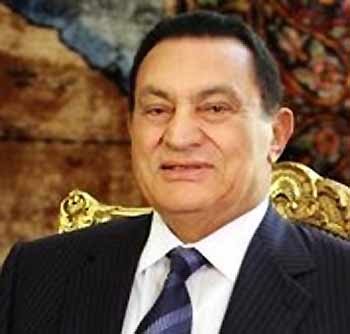
Step down Mubarak


Egypt's president Mubarak should step down because people are tired of him

By Elias Mhegera
AFRICAN countries including Tanzania should learn from events in North Africa and the Middle East calling for major political reforms including resignation of their leaders.

In Egypt pro-democracy leader Mohamed ElBaradei, better known in the West as the former director general of the International Atomic Energy Agency, joined the street protests.

In Friday last week the riot police had an up hill task to contain the biggest protests in three decades in Cairo. El-Baradei is considered a contender to unseat longtime Egyptian President Hosni Mubarak.

The turbulent situation in the Middle East is expected to have severe social consequences not only within those countries but also throughout the continent.

For instance within a very short time after the unrest situation occurred the prices of oil peaked up. No matter what happens in the Middle East, but all countries must study the situation carefully before deciding what to partake as a remedial to the problem.

There are indications that the youths are the most desperate in Tanzania. Local governments threaten to push the problem even higher after tough scuffles against the street hawkers the “machinga.”

The immediate solution therefore is not imposing curfew against them but find how they can be introduced to a series of shock absorbers. Let this be the task of experts and informed analysts not solely politicians.

States, including Tanzania must identify places where to get money without raising taxes directly. Banks and government leaders must negotiate on how to facilitate soft loans.

While all major psychologically important measures must be taken in order to calm down the militant youths.

Other long term measures to be considered are housing, jobs, and how the Government can overcome an enormous deficit without inflicting pain to the citizenry, this is by balancing income proportional between locals and investors.

There is a need to give more confidence to the desperate youths that the nation is still undergoing certain processes that will empower them in order to avoid them slipping back into frustrations.

The confidence should be justified by actions and not mere words. This must include whatever has been discussed in many forums including the World Economic Forum in Davos, Switzerland.

School leavers and fresh university graduates must be taken into consideration. And if possible the Government should inject funds to the National Service camps in order to improve production attract the youths there and reduce the “politics of stomachs”.


But even more important is the fact that there is a need to focus in production that is geared towards attracting major global markets in Asian countries, the U.S. and probably Europe.

All nations should remain reserved but must take special lessons from the Middle East unrest in order to take precautions once similar situations befall them.
mhegeraelias@yahoo.com Tel: 0754-826272
END

Environmental protection linked to a sense of ownnership


PHOTO: cutting of trees and even selling of charcoal could be reduced wit alternative sources of energy

By Elias Mhegera
WITHOUT a sense of ownership of land people in Tanzania, people will continue to destroy forests through falling of trees and setting bush fires for various reasons.

This was almost the common point that experts in natural resources converged in when discussing why there were many occurrences of environmental degradation in Tanzania.

The debate that was organized by Policy Forum at the British Council on Friday last week, discussed the title: “How do we confront the challenges in the politics of Reducing Emissions from Deforestation and Degradation?.

The first presentation was from Charles Meshack, the Executive Director of the Tanzania Forest Conservation Group, who presented ‘An analysis of the National REDD Strategy Development and Key design concepts for consideration.

Another paper was presented by Prof Pius Yanda from the Secretariat, National REDD Task Force, whose presentation was; ‘An overview of the newly released first draft of the national REDD Strategy’.

The discussant of the topic was Cassian Sianga, who is the Senior Forest Program Office, at the Tanzania Natural Resource Forum.

Another key figure who registered his presence in the occasion was Dr. Felician Kilahama Director of Forestry and Beekeeping in the Ministry of Natural Resources and Tourism.

Meshack says that the local communities must be fully integrated in the program in order to welcome this opportunity not for the sake of protecting the environment only, but also for generating incomes.

He hints that if community members are empowered in knowledge they can strengthen their control of land, through proper planning and proper forest management.

He also acknowledge that the national REDD policies will have to take into consideration the fact that almost all unreserved forests are on village land and that village land rights will have to be taken into serious consideration.

Moreover he notes that in order for the project to succeed there must be an involvement of the community groups, civil societies and the private sector.

As for professor Yanda he emphasizes that in order for this project to succeed there must be a lot of consultations amongst the stakeholders. He points that the people’s representatives like members of parliament and councilors must put their hand to support the project.

He highlights that another group to be consulted should be the directors of public institutions. He did not underestimate the role of the civil society and indigenous people particularly women who are the ones who cut trees for firewood.

Other components that he thinks should be involved are the legal and institutional framework review in the context of REDD intervention. He also insists that there must be proper mechanisms to manage information and communication.

Prof Yanda calls for shared information between key stakeholders vertically and horizontally. These are technical groups, government representatives and the media.

As for the technical working group he suggests that they must take into consideration the legal framework and governance strategies. He also calls for monitoring, reporting and verification of such reports.

Moreover he emphasizes that financial mechanisms, energy drivers, and agricultural drivers must also be taken into consideration.

Dr Kilahama is of the opinion that alternative sources of energy must be earmarked when planning to strike the balance between the production of trees and their consumption.

He admits that people in the rural setting cannot appreciate any process to preserve trees and they can not even grasp any substance from the experts who do not suggest to them alternative sources of energy.

Dr Kilahama who is former lecturer in forestry at the Sokoine University of Agriculture (SUA) says that just as the urban dwellers take every commercial opportunity in their setting in order to survive the same happens with the villagers when it comes to land and forest utility.

Dr George Jambiya from the University of Dar es Salaam who is also now attached to the Tanzania
Natural Resource Forum (TNRF) says that protection of forests should start with modifications of the existing land laws, policies and distribution regulations.

He also suggests that people must be made aware of other sources of energy like biogas, solar energy and wind energy.

“REDD is just an opportunity for sharing of the costs and benefits accrued from land, this must entail protection of such resources like land and forestry but at the same time without denying people their source of income” he remarked.

In 2007, Norway launched an International Climate and Forest Initiative (ICFI), an effort to invest approximately US $500 annually towards REDD efforts at national and international levels.

In 2008, Norway selected Tanzania to be a part of its global initiative serving as a pilot country for REDD development and implementation.

The Tanzania Forest Conservation Group and MJUMITA was the first approved REDD pilot project by the Royal Norwegian Embassy. Since then six more projects have been approved and are in the process of implementing REDD.
END

An empty mind is the workshop of the devil


By Elias Mhegera and Pamela Mtena
IT is now becoming fashionable that in almost all big cities in this country there are groups of youths who remain idle for the whole day.

Events in Tunisia and Egypt, the countries which are not yet at rest due to social unrest indicates that without tangible solution to resolve unemployment then you should be prepared for turmoil and youth unrest.

Happiness Moshiro from Kilimanjaro who have worked from hotels to supermarkets appreciated the fact that she is earning an income which can allow her to manage her minor demands but it is difficult to save in her bank accounts as her budget is always in deficit.

She was surprised that some of the supermarkets that she has worked are owned by prominent businessmen including South Africans, but the investors just pay as low as $7 per hour which was good enough but she has learnt there is a pressure from some circles that this amount should be reduced.

A statement from the Permanent Secretary Ministry of Labour and Employment through one Sauli Kinemela, says the government has never discouraged any employer from paying high salaries, in fact it has just set the minimum scales while encouraging good payments in the effort to eradicate poverty in this country.

Quick surveys by The Express this week revealed at times one could wonder if it is proper to call this a poor country. This is due to the fact that idleness could lead to mental malnutrition.

From Mwenge, Morrocco, Karume, Dar es Salaam city centre and Askari Monument one just finds groups of youths who are completely idle and it is difficult to know exactly their sources of income.

Thanks God to the advertising companies and various private business companies that engage the youths in part tome jobs. For those who tried their lucky at the Ubungo bus terminal it is unfortunate that the city authorities have been evacuating them from every now and then.

Through advertisements there are groups of youths who move around the city streets in big lorries with full blast music, while others stands a whole day holding banners of different companies advertising their products and tariffs.

These poor banished children of Eve are supposed to hold those banners from 7am in the morning until 6pm in the evening at a payment of 5,000/= only! The sun is theirs, the wind is theirs, the rain is theirs and the heavy fumes from different vehicles that pass along the high way.

However this is a point of departure if one was to compare them with who earn nothing at all due to unemployment. Groups of youths are here and there to try their luck which is a difficult task indeed.

Although this has happened; but still many people are queuing for jobs at such offices and markets. It seems there is a hidden agenda may be the government is aware that good payment will fuel even more rural-urban migration.


This then indicates that the government needs either to shift or balance development and business opportunities from the big cities to rural areas and the peri-urban. This probably will reduce the migration which has devastated production in the rural areas but also has created more population pressure in the cities and town centres.

Thomas Noni from Tabora says he has moved to Dar es Salaam after realizing that the circulation of money is good to an extent that whoever is committed in entrepreneurship is likely to earn from their efforts.

He says that it is not proper for the government to neglect the rural sector which is lacking all the attractions which have been bringing the youths to the major cities of this country.

It is under such circumstances that the desperate youths have been taking risks by trafficking illicit drugs, while others have suggested that their only way is to stow away.

During one of my visits in Mbeya last year I found that although a good number of the youths were engaged in commercial activities but they were not satisfied at how the government was taking their case.

No wonder the General Election last year saw almost all major towns and cities of this country electing legislators and councillors from the opposition on the pretext that the government has betrayed them.

It is at this juncture that one would suggest for the gradual transformation of the youths lifestyles, by supporting them with working amenities for those who have ventured for self employment.

It is imperative here to say that sometimes it is a sin to lament that this country is poor while God has endowed it with many precious natural resources which could employ a good number of the youths. Due to hardships the urban youths at times become hostile to those with financial means.
END

Cultural Event Kempinski Hotel


By Elias Mhegera
DIPLOMACY and culture will converge today in the evening at the Kilimanjaro Hotel Kempinski Showcase – when Tanzanians will join the Chinese to celebrate their new year.

The occasion that will attract diplomats and the business community has been organized in the collaboration of the Kilimanjaro Hotel Kempinski and the Embassy of the Peoples Republic of China in Tanzania this is the first 2011 “Kempinski Showcase” at the Hotel to be conducted this evening.

The Showcase which coincides with the Chinese New year festival will be comprised of folk art, musical and martial art festivities while also showcasing Tanzanian art and design.

The Showcase’s highlight will be two Tanzanian designers; Diana Magesa and Caroine Uliwa. Diana Magesa is one of Tanzania’s most original fashion designers.

In 2009, Magesa showcased her designs at Miss Universe Tanzania. Diana‘s creativity and professionalism was instrumental in positioning the pageant in promoting Tanzanian beauty, creativity and art.

She went on to design national costumes for the winners that took part in Miss Universe, Miss Earth and Miss International.

Her design for Miss Earth won the Best in National Costume, a first in Tanzania in the history of Miss Earth. In 2010, Magesa began teaching and inspiring children in Morogoro, Tanzania to be creators and designers. Magesa has been participating in various fashion shows successfully.

Diana will present an exclusive collection of 12 outfits, two of which includes fabrics from China, inspired by Chinese style and couture.

Caroline Uliwa is one of Tanzania’s young fashion designers. The Showcase is her very first opportunity to showcase her collection. She was first inspired to fashion at the tender age of six, when she would draw small figurines of her and her mum wearing stilettos and pencil skirts.

From then on, her interest the arts continued culminating in the courage to further explore her talent while pursuing a career in journalism. Her ultimate dream as a professional designer is being realized as she showcases her “Tight Stilettos“ collection for the very first time to a Tanzanian audience.

The featured Showcase Artist is Masoud Kibwana, from Mtwara Region in Southern Tanzania. Trained under Max Kanunidi, he also attended ADEA (African Development through Economics and Art), a vocational training center and the Russian Cultural Centre.

Masoud was also one of the seven artists’ in residence at the first ever “Kili” Art Camp organized and hosted by the Kilimanjaro Kempinski in 2010. He paints vivid abstract fine art depicting lifestyles of different communities and the problems facing society. Massoud has created works of art exclusively of the Showcase.

The Showcase also includes Chinese folk art – the Lion Dance and an exciting presentation of tai chi. Other presentations include Chinese paper cutting, glass paining, kite making and clay mounding.

The Chinese New Year is the most important and ceremonious traditional festival in China, just as Christmas Day to the westerners and other parts of the globe. The New Year falls on the first day of the first lunar month and is called the Spring Festival.
END

Friday, February 4, 2011

Ruling CCM losing its power grip in Tanzania


PHOTO: Presdent Jakaya Kiwete ruling CCM's chairperson


February 2, 2011
By Elias Mhegera
ALTHOUGH analysts and many commentators say the ruling Chama Cha Mapinduzi (CCM) is losing its power grip, the parity?s old guard are defending it vehemently.


Commenting to The Express exclusively the veteran political scientist currently teaching at the St Augustine University prof Mwesiga Baregu says the divided CCM can no longer thrive politically.


He reminds that in 1995, three years after the re-introduction of the multiparty is when the ruling party started its political downfall journey. This is because while accepting political pluralism as a new game, but a good number of its stalwarts remained conservative and with narrow vision.


An attempt by liberal minded politicians like the late Horace Kolimba to set a new philosophical direction was not received well, regardless the fact that he was once the party?s secretary general. ?Do you remember what happened when the late Kolimba said it has lost vision? They immediately disowned him, he eventually lost life in mysterious circumstances,? remarked Prof Baregu.


He envisage that the faction ridden party as it is now can no longer serve the mass interest as it used to be previously. He defend Kolimba?s assessment that the party needed a lot of transformations after accepting multiparty but the CCM heavyweights did not want to hear his plea.


Baregu says currently CCM is divided in three factions; there is the old guard, some of whom grew within the party serving in different capacities. He acknowledges that some of those are ethical and would like their party to maintain the tenets that its founder Mwalimu Julius Nyerere was enshrining.


He sees the second group as that of the network ?mtandao? which facilitated campaigns of its own kind which eventually saw President Jakaya Kikwete in the State House in 2005. He attributes the debacle going on in the party to the divisions within this camp.
Prof Baregu says within this group there are few who are satisfied because they are well positioned, while some of those who did not get juicy posts within Kikwete?s tenure are not satisfied because deep in their hearts they did not have a serving agenda but that of accumulating properties through their posts.


And lastly he sees a group of the disgruntled members who today make a lot of noisy. Some of those have never benefited any how being the CCM loyalists hence the hatred.

But also there are the youths who see their political future being jeopardized by the current ?weak? leadership hence a deviated stance recently on the Loan Board issue and the payment of Dowans, a ?fictitious power company?.


Another prominent professor in public administration at the University of Dar es Salaam, who preferred anonymity remembering what had befallen Prof Baregu?s after he had sought to renew his work contract, said there are ideological and ethical ridges which put in jeopardy the existence of CCM.


Peter Kuga Mziray the chairman of the African Progressive Party of Tanzania (APPT), and last year?s presidential aspirant in the General Election shares this stance saying that CCM is losing its appeal because almost all parties which brought independence in Africa have been replaced a sign that it delayed in Tanzania.


But the CCM vice chairman Mainland Tanzania Pius Msekwa says all these are false assessments, he needs a whole page in The Express in order to defend his party, he promises to come with something special for our next issue simply because mere comments will not do.


But in the same line is the CCM secretary general, Capt (rtd), Yusuf Makamba who in his an unusual jovial response defends his party that it is not crumbling anyhow, but he admits that after 18 years of their existence the opposition parties have now grown to full maturity a fact which has alerted his party to a large extent.
He vehemently criticizes those who compare his party with the opposition because the latter do not have any tangible history to be proud of. ?Our party (CCM) has a history of bringing independence to this country, it has brought about peace and tranquility to this country, these are some of the unique qualities that the party is proud of? said Makamba.


The party boss said that his party is a product of two parties TANU and ASP, the union of the two countries Zanzibar and Tanzania mainland eventually led to unification of the two parties to form CCM, he boasts that these are unique decisions and exemplary to many other African countries.


When he was asked if what happened when two Cabinet ministers and the CCM youth wing (UVCCM), opposed payments of the Dowans openly was not indiscipline to the CCM leadership he said there are both advantages and disadvantages of such actions.


He says it was due to such acts that some people claim that CCM is in internal strife which is not true. He says the truth of the matter, however is the party is becoming more transparent a culture that will have long term benefits.


But this stance is challenged by Dr Joseph Matumaini a lecturer in mass communication, policy and sociology at the St Augustine University. The don says the CCM debacle indicates that there is a leadership vacuum.


Instead he concurs with Prof Baregu?s stance that the CCM has lost vision and a sense of direction as envisaged by one of its co-founder Mwalimu Nyerere. He reminds that the Father of the Nation had introduced the leadership codes that have been set aside by the current leadership.


He reminds that CCM started its downward journey when it replaced the Arusha Declaration with the Zanzibar Declaration; the don claims that the Socialism and Self-reliance policy was appealing to the ordinary citizenry.


There is a leadership vacuum, President Kikwete has chosen to remain mum where he is supposed to speak loudly, and there is no single powerful politician within the CCM who can say no to the payments to the Dowans Company as Mwalimu Nyerere could have down if he was alive.
END

Thursday, February 3, 2011

Entreprenuership through art

By Elias Mhegera
INSPIRED by drawings that he used to see in his childhood, Masoud Kibwana never thought that he could partake art as a future career.

It was during his introduction by Mrs Anne Clarke wife of the head of the European Union delegation at the Kilimanjaro Kempinski showcase that many attendants were eager to know exactly why Kibwana has a unique talent.

During an exclusive interview with The Express, he admitted that he studies the market demands first before he design his own drawings.

“For me art is no longer a hobby, it is my major source of income, it is an entrepreneurship, so I have to take it seriously” he comments.

He says after his primary education in Mtwara he did not have a clear picture of what he will do next. Drawing therefore was just an activity in order to avoid boredom, but not for income purposes.

However it was just by coincidence that he eventually managed to attend a three years course in drawing in a vocational institute known as the centre for African Development through Economics & the Arts (ADEA) in Mtwara, where he was trained by one Max Kanunidi.

It was after the completion of his course that he realized that art could be more than a hobby, but a full time career. This is after he saw many people coming from as far as Dar es Salaam just to buy artifacts in Mtwara.

This then made him to come to Dar es Salaam in 2007, in anticipation to get a big market for his goods just to find that it was not that easy.

Kibwana admits that in Dar es Salaam he found that there were many well established artists who had already established special clientele with many art lovers.

He then discovered that he had to target a special segment of art lovers by discovering what really inspired them to buy. Since then he has been drawing according to what his clients proposes.

Since then art is not only a hobby but an entrepreneurship where he a guarantee of earning not less than Tsh 500, 000/= per month. Of course he supplements his income with other sources.

He thanks the Kempinski Hotel and the Chinese Embassy for having facilitated the showcase last Friday which exposed him to diplomats, business executives and fellow artists.

The event was used to show case of other two artists Diana Magesa and Caroline Uliwa. Moreover the event was used to introduce the Chinese New Year, this being the year of rabbit.

The guest of honour in the occasion was Ezekiel Mayige the Minister for Natural Resources and Tourism. The Chinese ambassador to Tanzania Liu Xinsheng reiterated the historical good reations of the two sister countries.

END